
Your first visit to Symmetry Aesthetics in Essex begins with a complimentary, no-obligation consultation. Upon arrival, you will complete a confidential patient registration and medical history form, along with a detailed skin typing assessment.
Your consultation typically lasts around 30 minutes and is conducted by one of our specialists, all of whom have extensive experience in medical aesthetic treatments. We do not employ sales representatives; every client is seen by qualified medical professionals dedicated to providing safe, effective, and bespoke treatments. Patients travelling from Brentwood, Epping, Ongar, or elsewhere in Essex can rest assured they are in expert hands.
During your consultation, we take the time to fully understand your concerns and aesthetic goals. Our team will explain the recommended procedure, the expected benefits, and any potential risks, answering all questions honestly so you can make an informed decision.
Pre- and post-treatment care will be outlined in detail, and there is no obligation to book a treatment immediately. If you choose to proceed, you may schedule your peel on the same day or at a later date via phone or email. We believe in giving our clients time to consider their options, ensuring confidence and comfort before any procedure.
Before your chemical peel, you will receive a detailed consent form to review and sign. Our team will answer any remaining questions and provide written pre- and post-treatment guidance.
Depending on your skin type and condition, you may be advised to use preparatory creams in the weeks leading up to your peel. These may include Tretinoin, Alpha Hydroxy Acids (AHA), or Hydroquinone for darker or tanned skin. Pre-treatment helps exfoliate the skin, reduce pigmentation, and optimise results while potentially shortening recovery time.
Clients undergoing medium-depth peels who are prone to cold sores may also be advised to take antiviral medication before and after treatment. All makeup, moisturisers, and nearby jewellery should be removed prior to your appointment to ensure a safe and effective procedure.
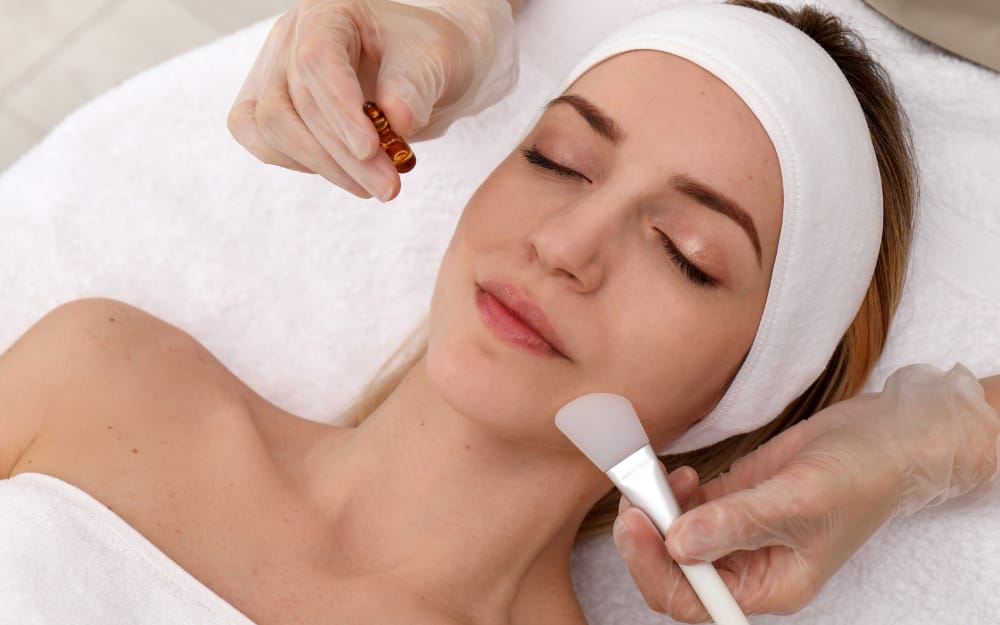
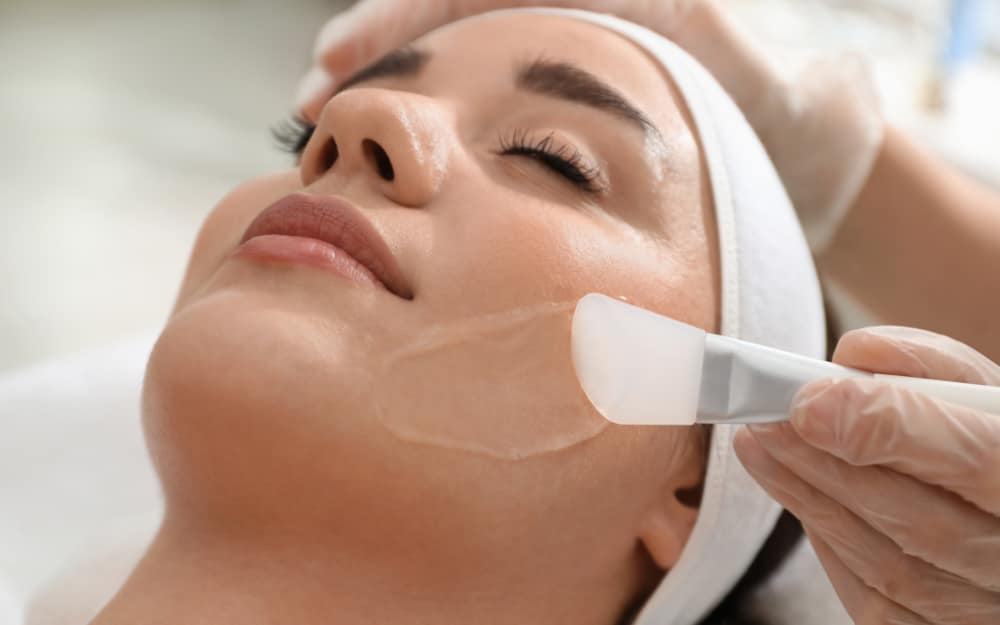
The procedure begins with a thorough cleansing of the skin to remove oils and impurities. The peeling agent is then applied carefully:
• Glycolic (AHA) peels produce a gentle warming or prickling sensation.
• TCA peels provide a more intense sensation but are applied for only a few minutes before cooling with compresses or our advanced ‘Cryo’ cooling system, maximising comfort throughout the treatment.
At our Essex clinic, we prioritise client comfort, and every step of the peel is performed with precision to ensure safety and optimal results.
Superficial Peels: Mild redness and occasional swelling may occur, similar to sunburn, but most clients can resume normal activities immediately. Makeup can usually be applied within a few hours.
Medium Peels (TCA): Redness is more pronounced, and mild swelling is common. The skin may darken briefly, with visible peeling starting around day three and lasting 3-5 days. Most clients take approximately a week off work for recovery.
Treatment Aftercare:
• Use cold compresses to ease initial discomfort.
• Cleanse gently twice daily and pat dry with a soft towel.
• Apply the prescribed moisturiser as often as needed to encourage repair.
• Avoid picking or scratching the peeling skin to prevent scarring.
• Makeup can be applied once peeling is complete.
• Protect your skin from sun exposure using the broad-spectrum sunscreen provided.
• Avoid saunas, steam rooms, hot baths, or showers for 48 hours post-treatment, as your skin may remain sensitive to heat.
Clients from Brentwood, Epping, Ongar, and across Essex consistently report excellent results when following our detailed aftercare protocol, achieving smoother, brighter, and younger-looking skin safely and effectively.
All advanced skin treatments at Symmetry Aesthetics, including chemical peels, are delivered within a structured medical governance framework. Treatments are performed by trained medical professionals working under established clinical protocols, safety procedures, and professional regulatory standards.
Patient wellbeing, treatment suitability, and ethical clinical practice guide every stage of care, from initial consultation through to aftercare and follow up.
Chemical peels are clinically controlled skin treatments and, like all medical aesthetic procedures, carry some potential risks. Temporary redness, tightness, dryness, flaking, or mild swelling are common and expected as part of the skin renewal process.
Less common complications such as prolonged irritation, pigment changes, or delayed healing are minimised through careful skin assessment, appropriate peel selection, and strict adherence to application protocols. All potential side effects, recovery expectations, and aftercare responsibilities are explained clearly before treatment so you can make a fully informed decision.
Chemical peels work by encouraging controlled skin renewal and improved cell turnover rather than delivering instant cosmetic change. Brighter tone, smoother texture, and clearer looking skin develop gradually as the skin completes its natural regeneration cycle.
Depending on your skin condition and treatment goals, a course of peels may be advised for optimal results, followed by maintenance treatments to support long term skin health. Treatment frequency is always personalised and adjusted according to how your skin responds, rather than following rigid schedules.
Every patient receives detailed written aftercare instructions to support proper healing and maximise results. Guidance includes skincare use, sun protection, and what to expect during the recovery phase.
Ongoing support is part of our clinical responsibility. Review appointments can be arranged to monitor progress, adjust future treatment plans, and ensure your skin continues to respond safely and effectively. Our care extends beyond the treatment room, with patient safety and long term skin health remaining the priority at every stage.
A chemical peel, sometimes called chemexfoliation or dermapeeling, involves applying a specialised chemical solution to the skin to encourage controlled exfoliation. This process removes the outer damaged layers, revealing fresher, smoother skin beneath. The newly exposed skin often appears more even in tone, brighter, and shows a reduction in fine lines, wrinkles, and imperfections.
Superficial chemical peels are generally suitable for most skin types, but individuals with darker skin tones face a higher risk of post-inflammatory hyperpigmentation, where the skin may darken after treatment. If you have a naturally darker complexion, it’s wise to consult a dermatologist about gentler alternatives to minimise this risk.
Peels may also be unsuitable if you:
• Have a history of abnormal scarring
• Have hyperpigmented scars
• Have skin conditions or take medications that increase sensitivity
• Are unable to avoid sun exposure during the healing period
The procedure is straightforward and typically takes around 15 minutes to complete. It begins with a thorough cleansing of the skin, followed by the application of a carefully chosen chemical solution tailored to your skin’s needs.
During this stage, you might experience a mild tingling or warming sensation, which usually fades once the solution is neutralized. Over the following days, the treated skin will gently peel or flake, with the intensity of exfoliation varying depending on the strength and type of chemical used.
Chemical peels are ideal for addressing a variety of skin concerns, including spots, freckles, wrinkles, scarring, and uneven pigmentation. They work to smooth skin texture, diminish the visible signs of aging, and promote overall rejuvenation.
Skin Aging: As we age, the skin naturally thins, elasticity decreases, and wrinkles begin to form due to muscle relaxation and reduced collagen production. External factors such as sun exposure, smoking, and stress can accelerate this process, resulting in premature aging. Common signs include fine lines, sagging, blemishes, freckles, melasma, and reduced skin firmness. Chemical peels help tackle these issues by resurfacing the skin, improving tone, and restoring a youthful appearance.
Scars: Scars from acne, injuries, or surgery can leave noticeable depressions or texture irregularities. For acne scars in particular, chemical peels are a highly effective solution, helping to smooth the skin’s surface, reduce discoloration, and enhance overall skin appearance.
Chemical peels are typically performed on areas where skin concerns are most visible or problematic. Common treatment zones include:
• Face – for general rejuvenation, fine lines, wrinkles, and uneven pigmentation
• Neck – to improve texture and reduce signs of aging
• Décolleté – to smooth lines and sun damage
• Back – often for acne scars or pigmentation issues
• Arms – for sun damage or rough texture
• Targeted concerns – such as wrinkles, fine lines, age spots, or acne scars
These treatments are tailored to each area to ensure safe, effective, and noticeable results.
Face2Face or Remotely (online)
A gentle “lunchtime” peel with no downtime. Smooths texture, refines pores and instantly brightens tired skin perfect for first-time peel clients or pre-event radiance.
A moderate-strength peel that targets uneven tone, congestion, and early signs of ageing. Refines texture and restores a healthy, luminous glow with minimal downtime.
A medium-depth peel that resurfaces, brightens and stimulates collagen for dramatically smoother, younger-looking skin. Ideal for sun damage, pigmentation, acne scarring and fine lines.
Course of 2 sessions for deeper, long-lasting rejuvenation. Includes post-care home kit to enhance results.
01992 245 314
07867 511458
book@symmetry-aesthetics.com
info@symmetry-aesthetics.com
Unit 11-12, Berwick Farm, Berwick Lane, Stanford Rivers, Ongar, Epping Forest, Essex, CM5 9PY

01992 245 314
07867 511458
Book an Appointment

We use cookies to improve your experience and analyse site use.